
Let me start with the part nobody tells you. Most financial media is not in the information business. It is in the attention business. The product is not the news. The product is you, sitting there watching, so an advertiser can reach you. And the single most reliable way to keep human eyes on a screen is fear. That is not a conspiracy. It is just the business model. Once you understand it, the headlines lose most of their power over you.
Follow the incentive
A calm, accurate headline that says "markets did roughly what you would expect today" gets no clicks. A headline that screams "is this the crash that finally breaks everything?" gets your heart rate up and your thumb scrolling. Both can sit on the same website on the same day. Guess which one leads. The outlet is not lying to you exactly. It is selecting for the version of the truth that holds your attention longest, because attention is what it actually sells. When you know that the alarm is the product, you stop treating every alarm as a fact about your money.
The tax, and what it actually costs
Here is how the tax gets collected. A scary headline hits. Iran, an AI jobs apocalypse, a recession warning. Your stomach drops, so you sell, or you stop investing, or you sit frozen in cash waiting for an all-clear that never rings. Then the market grinds higher without you, and you buy back later at a worse price.
The cost of that is not a vague "you might miss out." It is measurable, and it is brutal. Study after study of long-run market returns finds the same thing: a huge share of the market's total gains arrive on a tiny handful of its very best days, and those best days cluster right next to the worst ones, usually in the chaotic stretch right after a scary drop. Miss just a few of the best days over a couple of decades because you panicked out, and you can cut your long-term return dramatically, sometimes by half or more. The punchline is cruel. The people who flee during the scary headlines are the exact people most likely to be on the sidelines on the day the rebound actually happens. The headline that scared you out is what costs you the recovery.
This is not the behavior gap post
I want to be clear this is a different lesson than the one in The Silent Killer of Your Returns Is You, which is about the broad pattern of buying high and selling low. This post is narrower and more specific: it is about the media machine that manufactures the trigger, and the precise mechanism, the clustering of the best days, that turns one panic decision into a permanent dent. Same enemy, sharper knife.
The fix is one sentence you write in advance
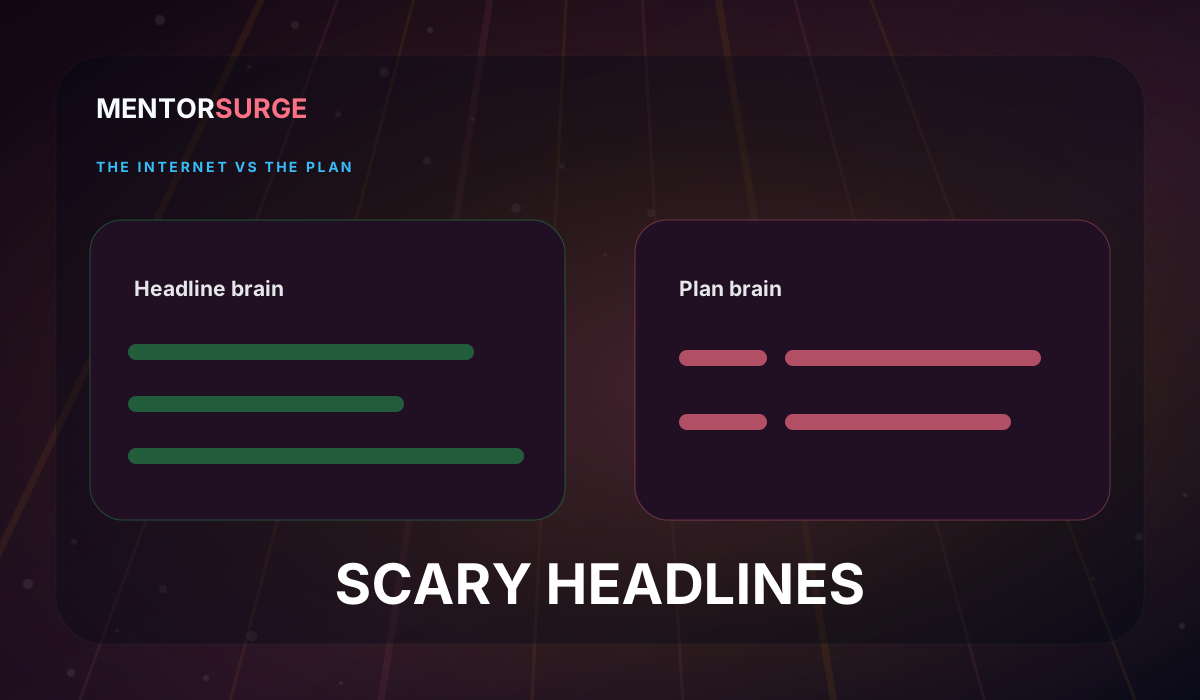
You do not beat this with willpower in the moment. In the moment your savanna brain is driving and willpower has already left the building. You beat it with a decision you made earlier, when you were calm. So write your plan down, literally, in one sentence. Fill in these blanks:
"I invest [how much] into [what] every [how often], and I do not sell because of headlines. I only review my plan on [a fixed date]."
The MentorSurge Weekly
The next move starts before the headline.
Get sharp stock research, market shifts, and practical wealth strategies in one clear email.
For example: "I invest $200 into a broad index fund every two weeks, automatically, and I do not sell because of headlines. I review once a quarter." That is the whole defense. Once that sentence exists, a scary push notification has nothing to grab. It is not a decision point anymore, because you already decided. This is the practical core of what I mean in How I Think About Market Downturns Instead of Panicking.
Noise is permanent, so price it in
There has never been a calm decade. Every year of your investing life will hand you a headline that feels like the one that finally breaks the system. Almost none of them do. If you wait for clear skies to invest, you will wait forever, which is the exact trap in Stop Waiting for the Right Time. Read the news to understand the world. Just never let it tell you when to buy or sell.
Write the sentence today
Do not close this tab and go back to scrolling. Open your notes app and write your one-sentence plan right now. Put a fixed review date on it. That single sentence is the difference between an investor who pays the fear tax over and over for forty years and one who simply does not. The anxiety is optional. The tax is optional. Decide once, and stop paying it.
Keep reading: How I Think About Market Downturns Instead of Panicking | The Silent Killer of Your Returns Is You
*: MentorSurge is not a financial advisor. This post is for educational and entertainment purposes only. Nothing here is financial or investment advice. Past market behavior does not guarantee future results. Always do your own research and consult a licensed professional.*
Reader checklist
A practical checklist for Scary Headlines Are a Tax on People Without a
Read Scary Headlines Are a Tax on People Without a through a checklist around financial discipline, before the feed turns into urgency. The news does not make money when you feel calm. It makes money when you keep watching, and fear keeps you watching. Here is the actual business model behind the panic, the well-documented cost of reacting to it, and a one-sentence plan template that makes the headlines stop costing you money.
For this mindset piece, map the claim, measure the habit, and separate the cost of doing nothing. Connect that work back to "Write the sentence today" and "Follow the incentive" so the idea turns into a specific next move.
That is how a post becomes a usable rule instead of another tab you forget. Keep emotional control and mindset visible while you decide, because vague motivation fades faster than a written rule.