

The market dropped 35% in March 2020 in 23 days. It dropped 25% in 2022 over 10 months. Both felt like the end of the world in real time. Both look like obvious buying opportunities on every chart printed since. The entire difference between investors who win and investors who lose lives in that gap, between how a drawdown feels while it is happening and what it turns out to be, and the only thing that reliably bridges the gap is a framework written down before the screen turns red.
I want to be precise about the claim here. Bear markets are wealth transfers from people who panic to people with a process. Not from dumb to smart. Not from poor to rich. From unprepared to prepared. Preparation is free, which makes this the rare edge in markets that costs nothing.
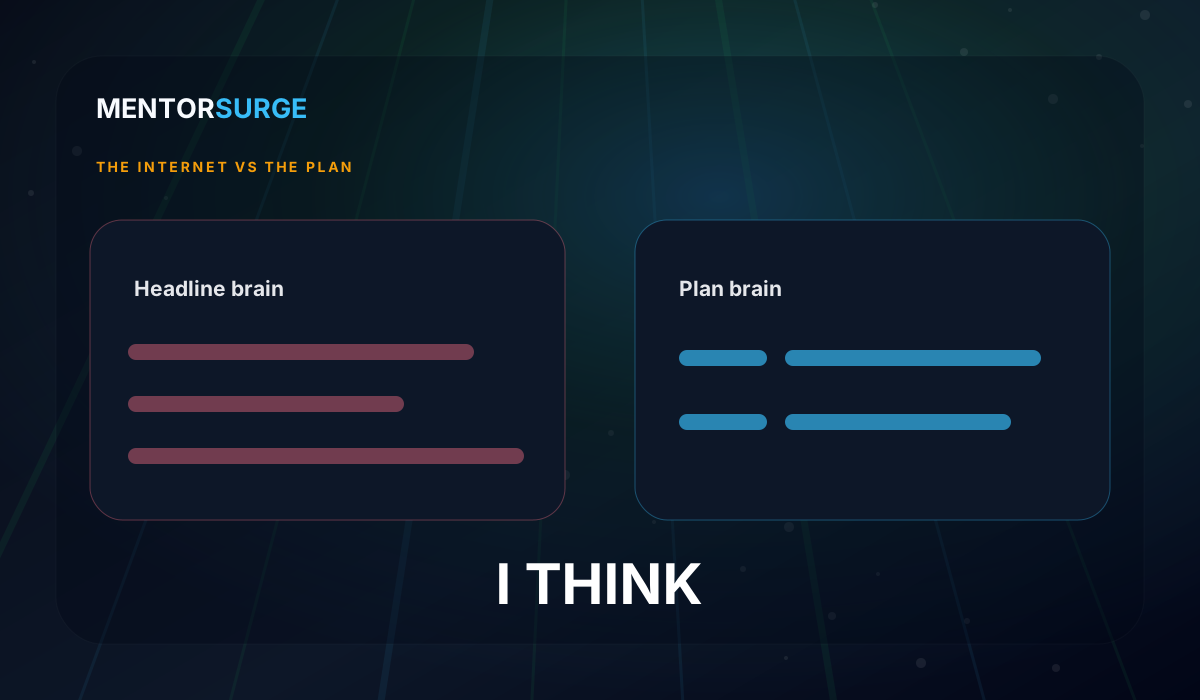
What actually happens inside a drawdown
The pattern is depressingly consistent across 2008, 2020, and 2022. Most retail investors hold through the first leg down, telling themselves they are long-term investors. The second leg breaks them, because by then the losses are large enough to hurt and the headlines are unanimous that worse is coming. They sell near the low, feel relief, and that relief is the trap: it keeps them in cash while the recovery happens, because no moment during a recovery ever feels safe. They re-enter much higher, having converted a temporary drawdown into a permanent loss.
Notice that no step in that sequence involves bad analysis. Every step is emotion executing flawlessly. Which is why the solution is not more analysis. It is removing emotion from the decision seat before the drawdown starts.
The five pre-commitments I run
1. Asset allocation decided in advance, in writing. A 60/40 or 70/30 stock/bond split, whatever fits your life, written somewhere you will actually see it when you are scared. The document outranks the feeling. That is its entire job.
2. Rebalancing triggers, not rebalancing moods. When stocks fall 20% and bonds hold, my actual allocation has drifted, so the rule says: sell some bonds, buy stocks, return to target. Notice what this does. It forces me to buy equities precisely when buying feels insane, without requiring me to feel good about it. The math makes the call so my amygdala does not have to.
The MentorSurge newsletter
The next move starts before the headline.
Get sharp stock research, market shifts, and practical wealth strategies in one clear email.
3. Dry powder with a deployment schedule. In high-valuation regimes like 2026 I hold 15 to 25% in cash and short Treasuries. That powder has pre-assigned tranches at 20%, 30%, and 40% drawdowns. Three planned buys per major correction, decided years before the correction has a name.
4. No daily screen-checking during drawdowns. Daily prices during a panic are an emotion delivery mechanism, not information. Weekly or monthly checks are plenty. Your allocation does not need supervision. Your feelings need starving.
5. Hold high-conviction positions unless the thesis itself breaks. Price falling is not a broken thesis. A broken thesis is the business deteriorating: lost customers, dead product, broken balance sheet. If I cannot name what specifically broke, I am not selling, I am flinching.
The receipt from 2022
I followed this framework through the 2022 bear. Deployed the cash tranches on schedule as the drawdown deepened. The positions bought at 25% off peak are up 80%+ as of mid-2026. The same money sitting in cash would have lost real purchasing power to inflation while waiting for a "safe" moment that never announced itself.
I am not sharing that to flex. I am sharing it because the framework gets the credit, not me. In the moment, every one of those buys felt early and stupid. The plan executed anyway, because the plan was written by a calm version of me that the scared version was contractually obligated to obey.
What breaks people, specifically
Three forces, every cycle. Social proof: watching neighbors and group chats post losses and exits, because panic is contagious and selling feels safer in a crowd. Headline catastrophizing: every major drawdown produces fluent, confident predictions of Great Depression 2.0, and the people making them sound smarter than the people saying "this is probably normal." And amnesia: forgetting that every prior major US drawdown was followed by a higher high within 24 to 48 months. The pain of the moment is vivid. The math of the cycle is abstract. Vivid beats abstract unless you have it in writing.
Your homework before the next one
You will see another 20 to 30% drawdown within the next 5 years, quite possibly the next 2. That is not pessimism, it is base rates: corrections are a feature of equity markets, the recurring admission price for long-run returns.
So the question is not whether it comes. It is whether a written plan exists when it does. One page: your target allocation, your rebalancing trigger, your cash tranche levels, and one sentence at the top reading "volatility is not a thesis break." Write it on a calm Sunday. Future you, staring at a red screen at 3am, will execute whatever document exists. Make sure one exists.
*: MentorSurge is not a financial advisor and this is not financial advice. This post is for educational and entertainment purposes only. Nothing here is a recommendation to buy or sell any security, and all examples are hypothetical. Past performance does not guarantee future results, and investing involves substantial risk of loss. Numbers cited were accurate when written and change constantly. Always do your own research and consult a licensed professional before making decisions with real money.*
Risk first
A deeper checklist for the name
Anchor How I think about market downturns instead of panicking to a repeatable rule around portfolio strategy, before the market mood changes again. Market drops are terrifying in real time and obvious buying opportunities in retrospect. The difference between investors who win and those who lose is almost entirely how they handle the downturns. Here is my exact framework.
For the name, scan the business evidence, challenge the market behavior, and simplify your own sizing. Connect that work back to "Join the MentorSurge Community" and "The five pre-commitments I run" so the thesis stays tied to the article, not the loudest take in your timeline.
That turns a hot ticker into a controlled research project instead of a mood trade. Keep investing psychology and risk management on the page while you decide, because the most expensive trades usually start when the risk line disappears.